Context
Many people are unaware of the difference between HTTP (Hypertext Transfer Protocol) and HTTPS (Hypertext Transfer Protocol Secure). In this day and age, it is necessary for users of the internet to be aware of how their data travels as well as how secure it is across the network.
Data is encrypted differently across different data transfer protocols. To simplify - in HTTP, while your data is encrypted, the key to decrypting it is included in the data packets themselves. In HTTPS, the key only lies with the receiving server, which ensures that your data remains secure in transit (unless someone is very determined to steal your information).

What’s the concept, really?
The digital aspect of the project is a website where people could upload and transfer any sensitive data, and also choose to “attack” it.
Based on the transfer protocol chosen, the consequences of the attack would be different, thus showcasing the difference in the security of different data transfer protocols.
Projector display
This photo travels across the screen
Base Setup

A robot that is representative of the network that the data travels across!
The user puts a piece of data in this “secure” box, and chooses a protocol.
The user can try to steal their data from the box. If the protocol chosen is HTTP, the transparent box is open, and the data box be removed from the bot, leaving the piece of data vulnerable. Else, the transparent box is open, but when the data box is picked up from the bot, it snaps shut.

What’s tangible about this?
User Journey Mapping
The Process


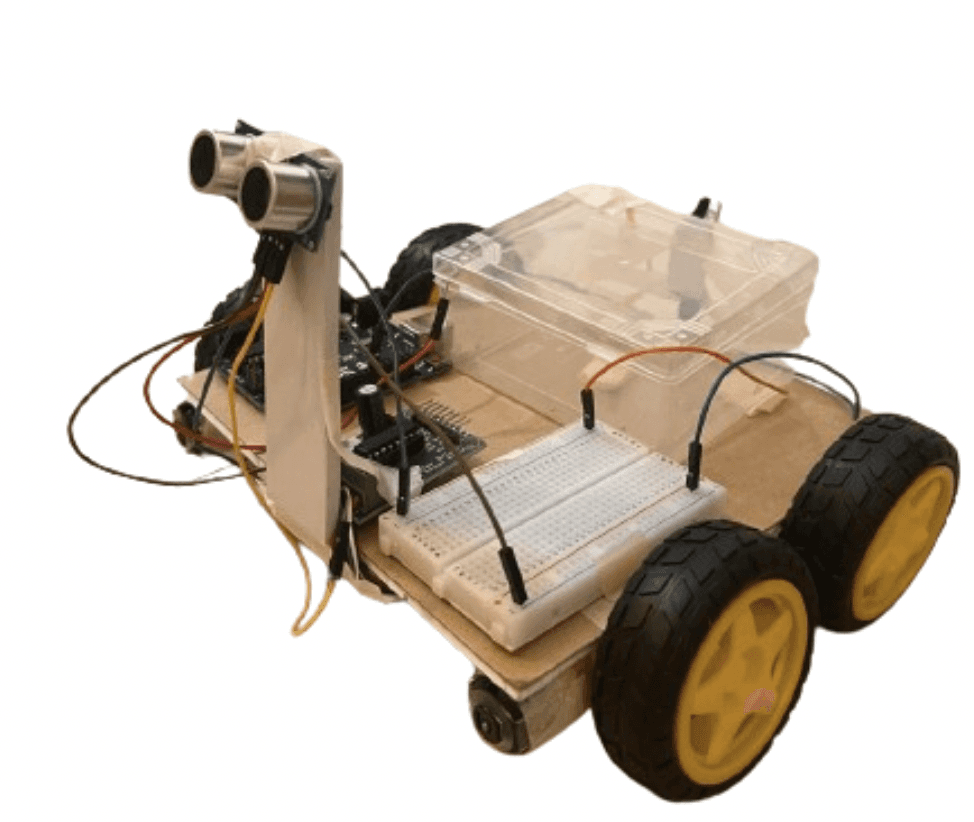

The Final!
Tangible computing projects often present unforeseen challenges that cannot be predicted until hands-on work begins.
Prototyping plays a crucial role in tangible computing projects, allowing for early identification of necessary adjustments.
Early-stage prototyping helps save time and resources by revealing required changes before the final product is developed.
The iterative nature of prototyping allows for refinement and optimization of the project's design and functionality.
Hands-on experimentation fosters a deeper understanding of the technology and its applications.
Through prototyping, valuable insights are gained into the intricacies of the project, leading to improved final outcomes.
and most importantly...
sometimes turning off and turning on your laptop can fix the code!
Our Learnings
How does the website work?
Play ‘Packet Attack’ with us!

We asked a few of our peers to interact with our tangible model, and treated it as a game where one of them could write a secret about the other. As the model was a representation of HTTPS, the secret remained safe, even when one of them tried to steal it.
Thank you for scrolling :)
If my work interests you, please feel free to get in touch. Let’s make magic!
Resume

Packet Attack!
Gamified Intervention on Internet Awareness
Tangible Computing
Arduino
HTML
The aim of this project was to demonstrate how the encryption protocol in place in HTTPS protects the user’s data, as compared to how HTTP leaves the user’s data vulnerable to man-in-the-middle and eavesdropping attacks.
4 week studio
2 member team
The Circuit


The Code