My Scrub Daddy is a Girl
A Deep Dive into the Gendered Perception of Objects
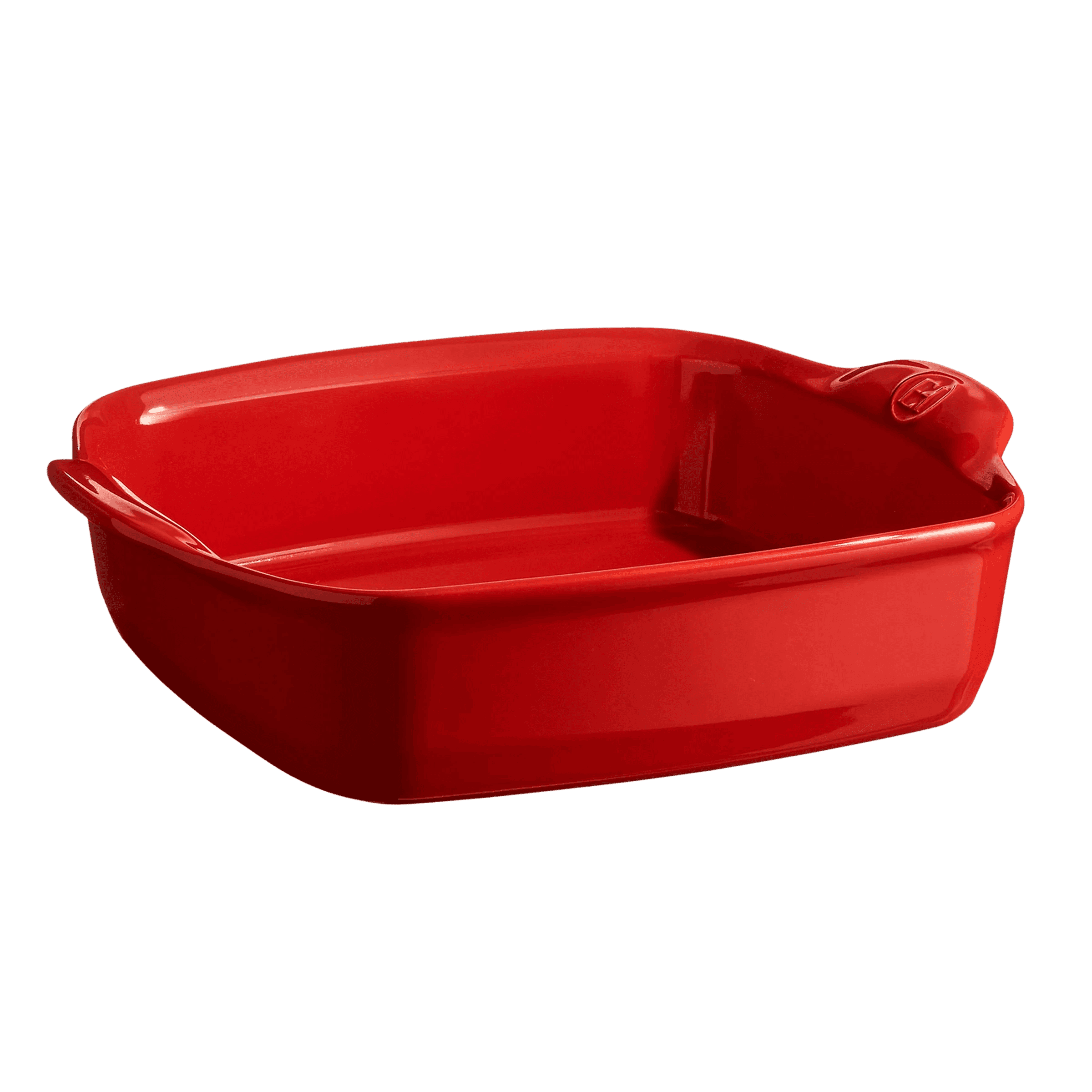
This is a baking dish.
There is nothing about its inherent design or function that should make it ‘male’ or ‘female’ - it is a ceramic, oven-safe dish that is used for baking various foods in the oven. But what is the gendered perception of this object?

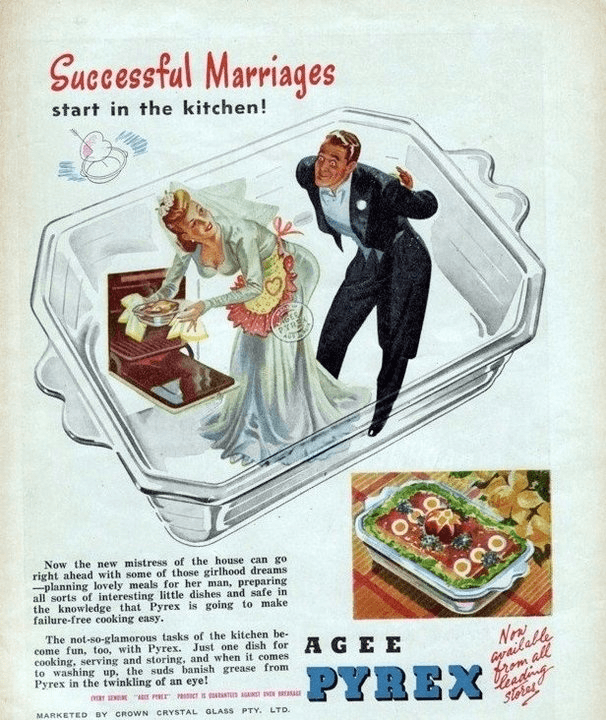


Ads from as far back as the 1940s advertise this object for women, who were traditionally the homemakers who used the product the most. While a baking dish may not be referred to with ‘she/her’ pronouns, it is associated with the female sex as a result of prevalent gender roles in the largely patriarchal society that we live in.
In Sarah Pink’s (2004) Home Truths: Gender, Domestic and Everyday Life, she writes about a female informant who, after Christmas dinner, got so fed up with a greasy baking dish that she threw it out into the yard for two days. However, she brought it back inside after three days and proceeded to wash it with boiling water.
But before we get any further, it is important to define the difference between gendered design, function and perception.
The female body registers the nearness of the baking dish even as it sits outside the house for three days. It touches upon her mind and leaves its impression there, while bodies that are not part of the discourse of housework do not register its nearness even on the dinner table (Suri, 2023).
Gendered Design


Gendered FUNCTION


Gendered PERCEPTION
How people mentally assign gender to an object even if it has no gendered function - based on stereotypes/feelings, not really design/function.

While the three terms may sound similar, they imply very different things vis-a-vis the gendering of objects.
Below are popular advertisements for certain daily use objects found in Indian households. There is nothing about their design or function that is inherently gendered. For each object, select whether you think it is marketed towards a male or a female user. There is no right answer, just your perception of it!
Are they marketed towards a male user or a female user?
Click to ANSWER AND scroll!


If you thought that most of them were marketed towards female users, you’d not be the only one! Ad targeting is heavily skewed towards female audiences when it comes to ads for baby products, laundry and household cleaning products. (Where did I get this data?)
Baby Products
Laundry Products
Household Cleaner
Food Advertisements
Retail Advertisements
0
10
20
30
40
50
60
70
80
90
100
Men
Women
Legend
Type of product advertised
Relationships between objects and gender are formed and take place in ways that are so accepted as ‘normal’ that they become invisible. Thus, we sometimes fail to appreciate the effects that particular notions of femininity and masculinity have on the conception, design, advertising, purchase, giving and uses of objects, as well as their critical and popular reception.
To investigate this further, I identified some everyday objects in Indian households that we interact with almost daily…
Click to filter!
LOOK AROUND INSIDE YOUR HOUSE.





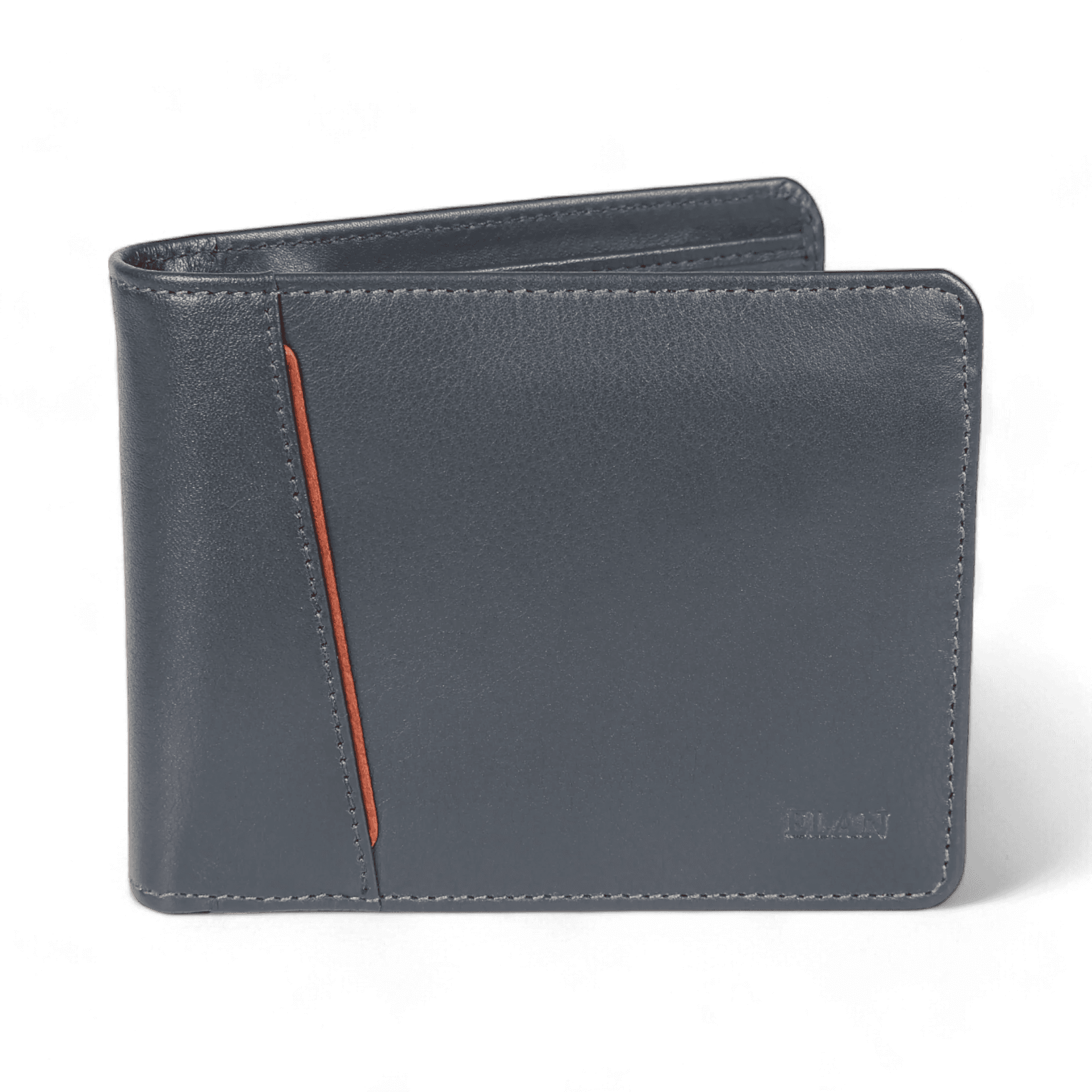



GENDERED DESIGN
Gendered Function
Gendered Perception
FEMALE
MALE
X
How do these objects reinforce, challenge or evolve gender roles over time?
REINFORCE




objects associated with rituals
CLEANING IS STILL VIEWED AS A WOMAN’S JOB
MARKETED TOWARDS FEMALES


PLAY FOR CHILDREN IS NOT GENDERED
FEMINISM IN LABOUR

CHALLENGE

EVOLVE


MEN CONTRIBUTING TO THE HOUSEWORK IN URBAN HOUSEHOLDS
MENSTRUATING FEMALES ARE NOT RESTRICTED FROM THE HOUSE
On conducting a simple Google search on “male” vs “female” objects, these were the results:

FEMALE
Male

Whether consciously or not, we participate in the gendering of these objects in our everyday life, which is a bit dismal to think about.
THE PERCEPTION OF THE GENDER OF OBJECTS
The most frustrating objects in the data set are the pair of male and female razors. This is an annoyingly familiar marketing tactic, one which perpetuates old-fashioned gender stereotypes.
From razors, cell phones to power tools which often make claims of being “unisex”, men decide what “unisex” means - and not surprisingly, it ends up pretty much meaning “male”.
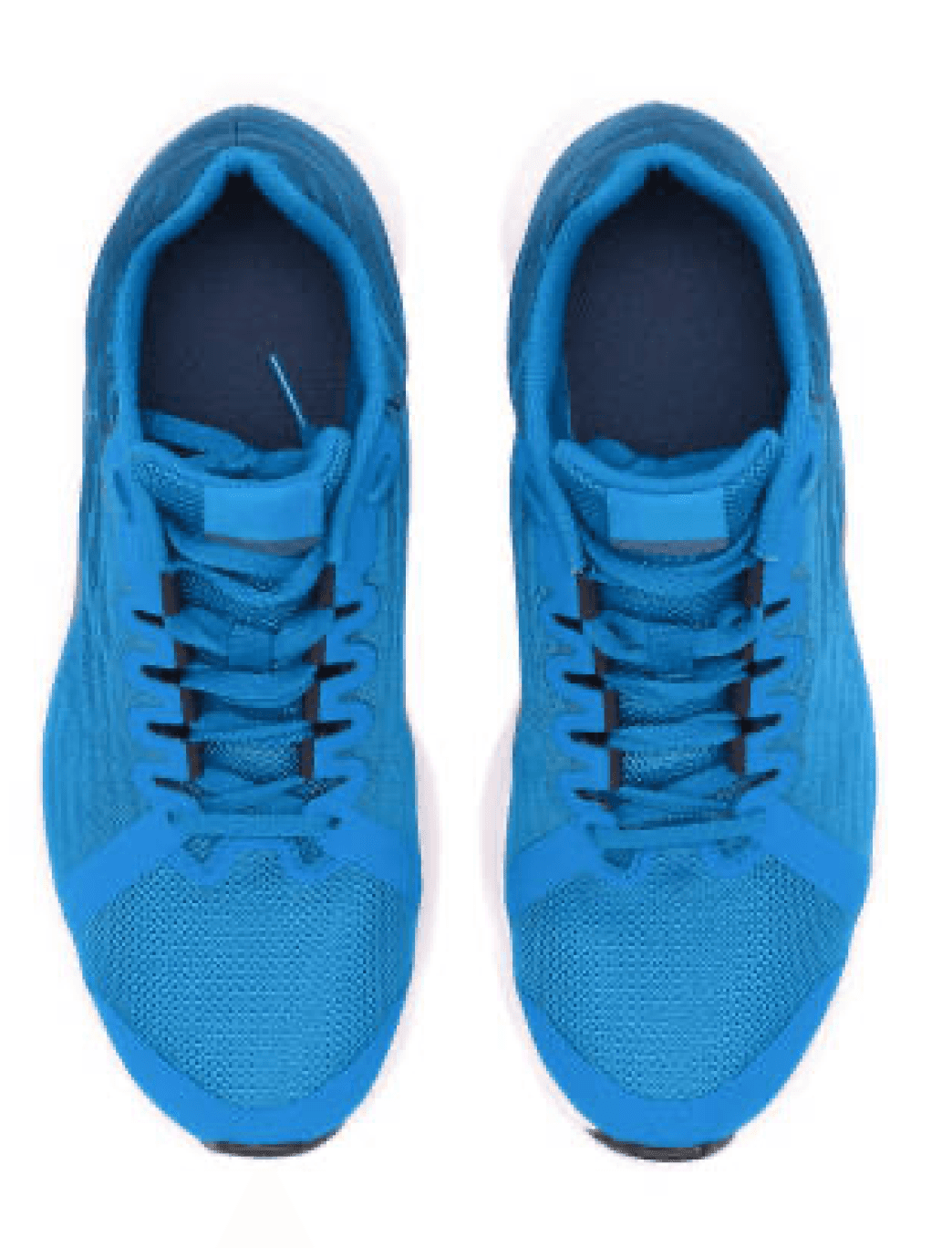
The nuances of the female athlete’s foot in comparison to the male foot include a big toe that is shallower, an arch that is higher, and a foot that is smaller for a given body height.
The majority of running shoes on the market today are designed with a male foot, truly a “shrink it and pink it” solution - selling shoes for female runners that were made to fit a man’s foot.


“SHRINK IT AND PINK IT” is a common phrase used in the product creation world for designing products for women. Women are too often left no choice than to use products that were designed by men for men, just scaled down and colored pink, or some stereotypical feminine color.

Another interesting object in the data set is the TV remote.
In fact, this is a type of gendering that is prevalent in my family as well - my father is the one who is the “tech guru”, who knows how to use all the smart devices at home. My mother displays a nervousness and hesitancy to learn about such technology for reasons that I have never been able to understand.
It’s just tech, right?
Gender analysis of the use of technology reveals a historically unequal power relationship between women and men. Differences in access to economic resources and knowledge, together with gender norms and perceptions of technology, can sideline women from technological developments.
A literature review of gender differences in technology use shows women to be more anxious than men about IT use, reducing their self-effectiveness and increasing perceptions of IT requiring greater effort (Goswami and Dutta, 2015). ‘Impostor syndrome’ – or a fear of failure – has a real impact on women, and men’s reactions to women’s discomfort with technology is often mocking or dismissive, making many women more reluctant to engage (Tedesco, 2019).

Perhaps the biggest victims of the gendering of objects in India are children. Did you notice the Barbie doll and the action figure among the other objects?
Stereotypical definitions of gender are particularly well reflected in the design of these dolls, first produced in the United States. Barbie and ‘Action Man’ provide a case study through which we can explore the contradiction of a gendered object which appears to be reiterating and reinforcing gender stereotypes, but which exists in a world that increasingly questions traditional gender roles.


THINNESS VS. MUSCULARITY
FEATURES
ASSOCIATED QUALITIES
CLICK TO View by:
The design and advertising of babies and children’s clothing also undoubtedly reinforces the gendering of identities for boys and girls. Girl toddlers, in particular, learn to look at themselves, to seek admiration from others for their appearance, and to display their clothes.

Promotional images of models donning clothes inscribe particular visual ideals of femininity and masculinity which appear wholly conventional. Little girls are dressed decoratively using traditional dress codes and they adopt passive poses reminiscent of fashion models in contemporary magazines, whereas little boys sport functional clothes which enable them to interact with the environment in an assertive and imposing manner.





DOES MY FAMILY GENDER OBJECTS?
The above categorisation of data was done according to generic trends regarding the perception of the gender of objects, and not necessarily my personal experience with them. To supplement this, I also interviewed my family to understand their interactions with these gendered objects.
I’ve noticed that I sometimes intentionally use objects designed for men as a way to make a point. But ironically, by doing that, I’m also reinforcing the very idea that these objects are gendered. I’m acknowledging the bias just to subvert it — but that still means I’m participating in the system. It’s like trying to outplay a game that’s rigged by still following the rules.
In other words: you can’t escape the gendering of objects - not even the gendering of yourself.
The real challenge, then, is in neutralizing the object’s gender entirely - refusing to read meaning into choices that should just be choices. But that’s a cultural shift, not an individual one. And we’re not quite there yet.
So how do we actually challenge this?
Because if you use the object designed for your “gender,” you’re seen as complicit - playing into the role. But if you use something coded for the “opposite” gender, you’re seen as resisting your own. There’s no way to simply exist outside the system; whatever choice you make, it’s interpreted through the lens of gender.



It’s not just about girls playing sports or wearing cargo shorts. It’s an entire subculture built around rejecting the traditional markers of femininity - markers that often take the form of gendered objects in childhood.
Toy cars vs. tea sets. Action figures vs. baby dolls. Outdoor roughhousing vs. indoor roleplay. From the start, objects are coded, and preferences are shaped to reflect what a “girl” or “boy” is supposed to be.
Tomboy identity is often a response to this - one that feels empowering, but still exists within the binary it’s trying to reject.
DO I GENDER OBJECTS?
METHODOLOGY
CITATIONS
SECONDARY RESEARCH

Primary RESEARCH

The type of data presented in this narrative research piece is a combination of quantitative and qualitative data. All statistical data has been taken from published academic papers and articles. The focus is on qualitative data, as the aim was to examine and understand the opinions, behaviours and experiences of people. All the data collected from primary and secondary research has been graphically or textually represented.


Would you say there is a marked difference between the objects used by you versus your husband at home?
The kitchen is not a very gendered space at home - the dishes are washed by your dad, and the kitchen is also cleaned by him. He also uses the grinder more than I do.
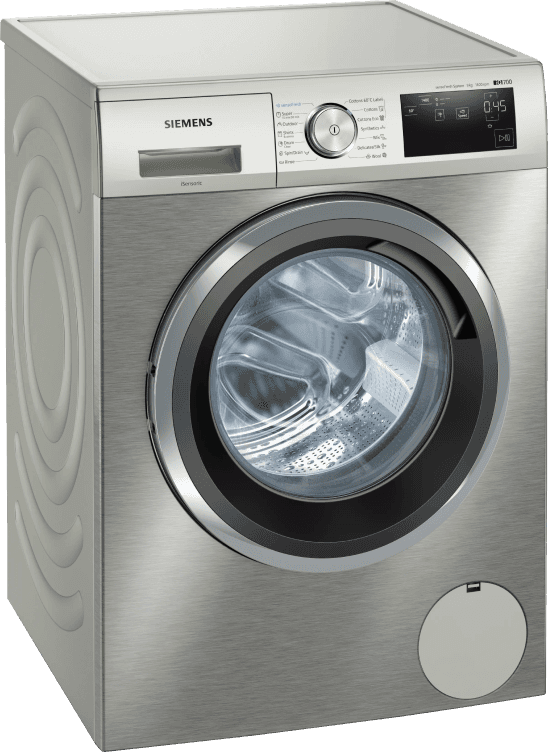
The laundry is definitely something that is gendered - the washing machine and detergents are only used by me. And the toilet cleaning liquid as well.
Another thing that I have noticed is that the cupboard is a “feminine” space - clothes are bought, washed, folded and organised by me.
Everyone’s jewellery and accessories are stored in it, and there is a separate document drawer which is usually accessed by your father, but even that is organised by me.


MOTHER
FATHER
BROTHER
Click to View!

FIN.