
Group Project | Game Design | Environmental Consciousness

Compete to Score the Lowest!
In this game, players play as the owners of the last 5 apartment buildings in the world. Resources are limited, but are required for survival. Focussing on the concept of ‘sustainable energy’, players must pick and pass cards such that they collect the lowest number of points. The cards represent various sources of energy, both renewable and non-renewable. While doing so, they must also complete a task assigned to them. Score zero to win!


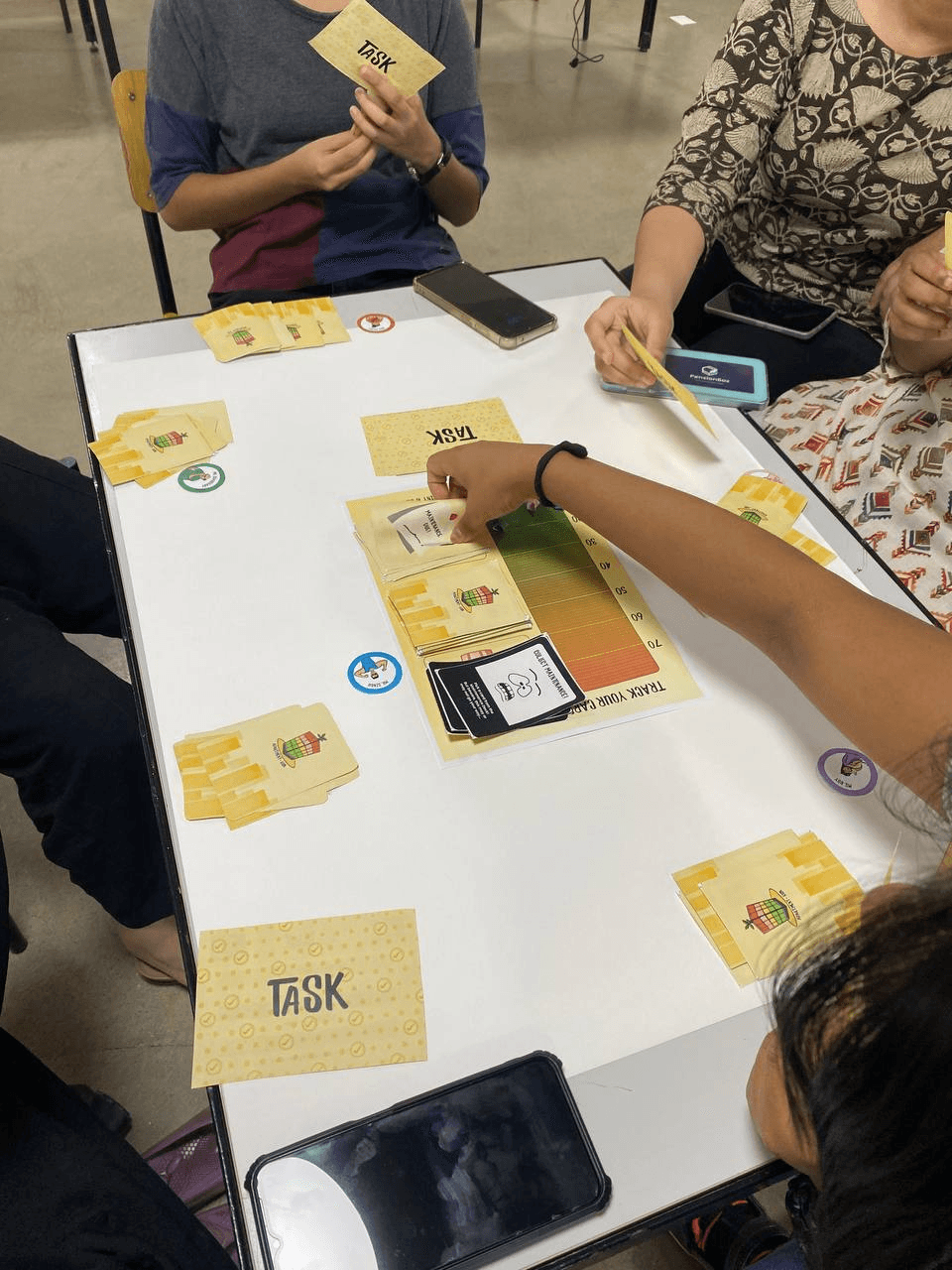
The game board consists of a carbon footprint tracker/energy meter, which allows players to track their scores as the rounds progress. It is colour coded to indicate that scoring lower is better and the way to win the game!
There is also space for the main deck, maintenance cards and the discarded wild cards to be placed on the board.


The main deck is colour coded to indicate the type of task the resources can complete.
Red: Waste Management Yellow: Power Management
Green: Environment Tasks Blue: Conservation of Water


There are 15 unique task cards, colour coded by type of task using the same coding as the resource cards. The total number of points to be achieved to win each task amounts to about the same, allowing re-playability of the game while maintaining an even ground for all players.


There are five characters to choose from, each an owner of an apartment building.


There is a positive and negative version of each Maintenance Card - you win or lose 3 points based on your luck!




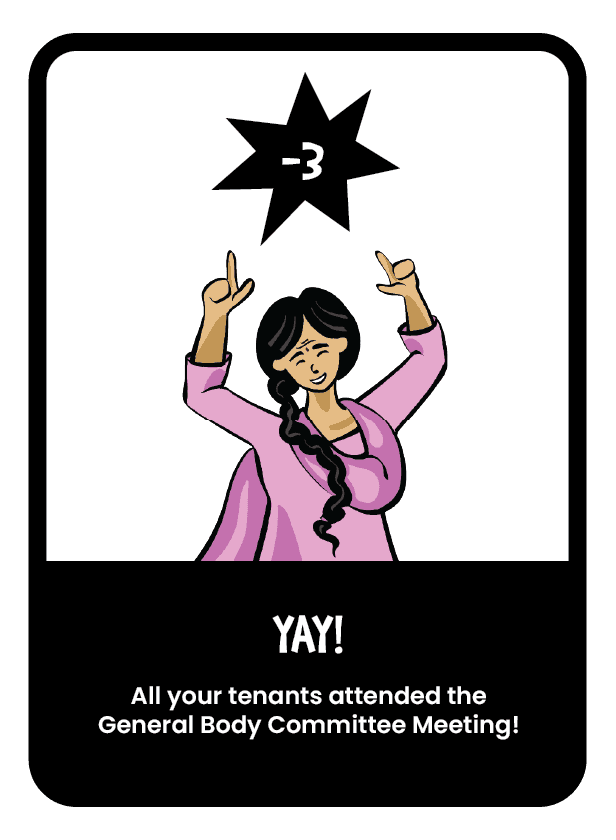


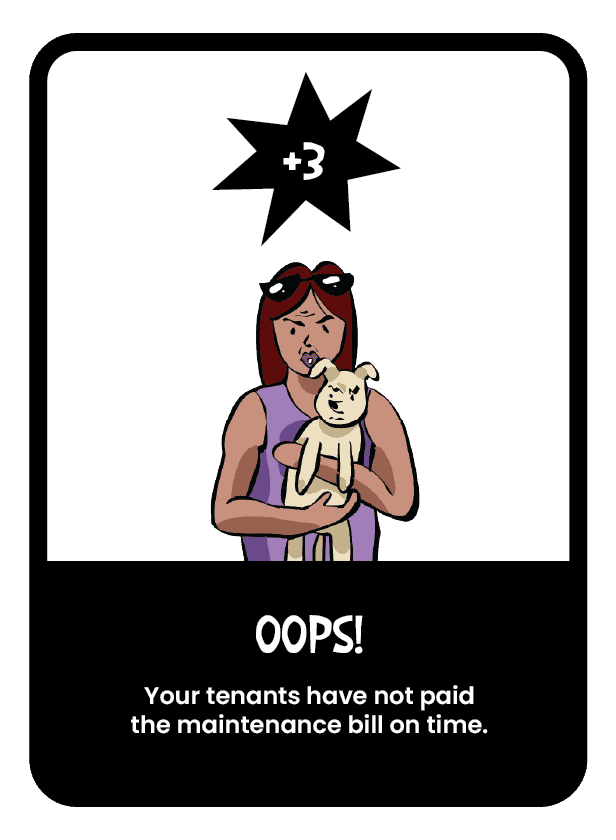


There are two types of wild cards shuffled in with the deck, which grant you special powers.





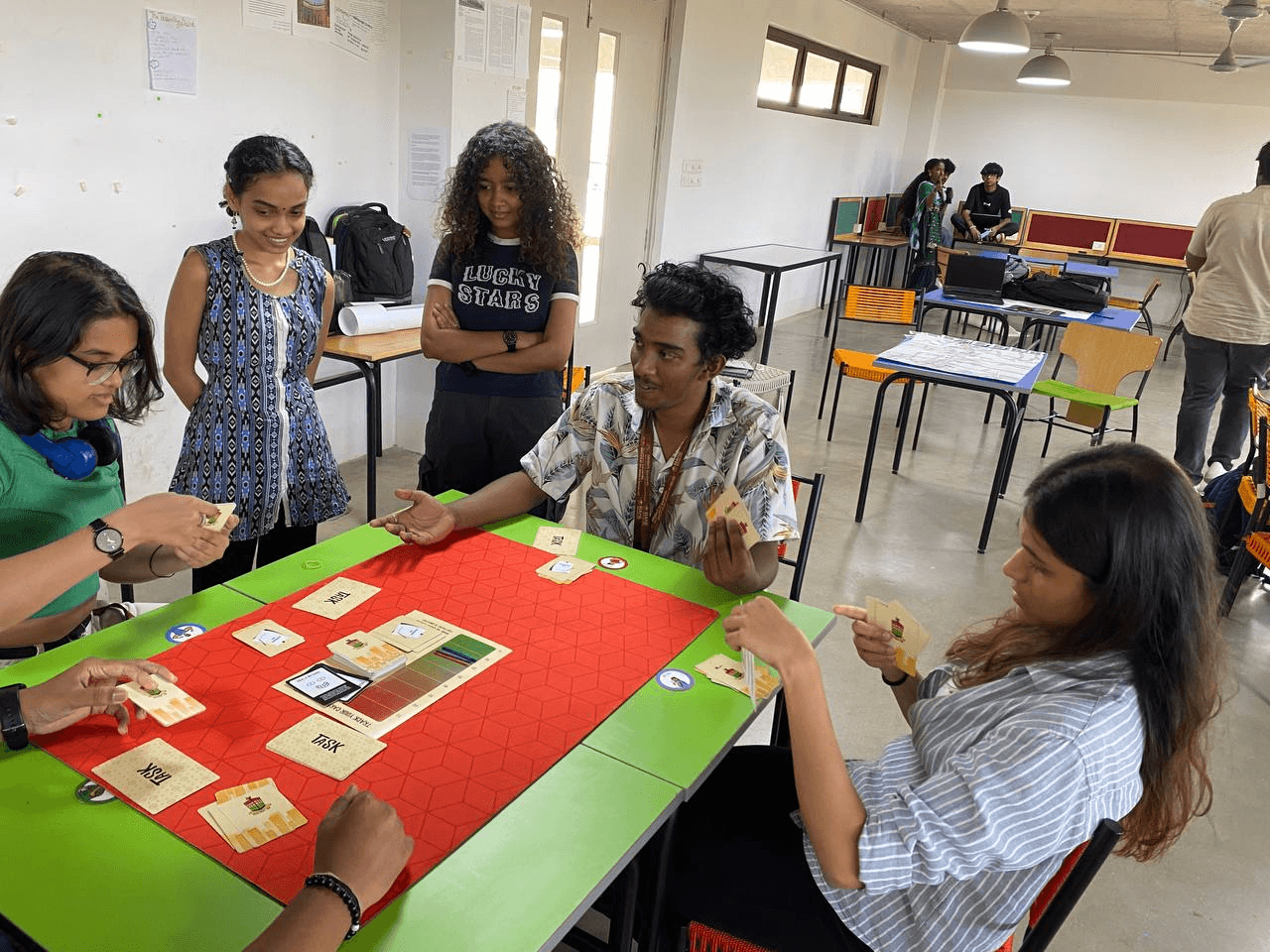


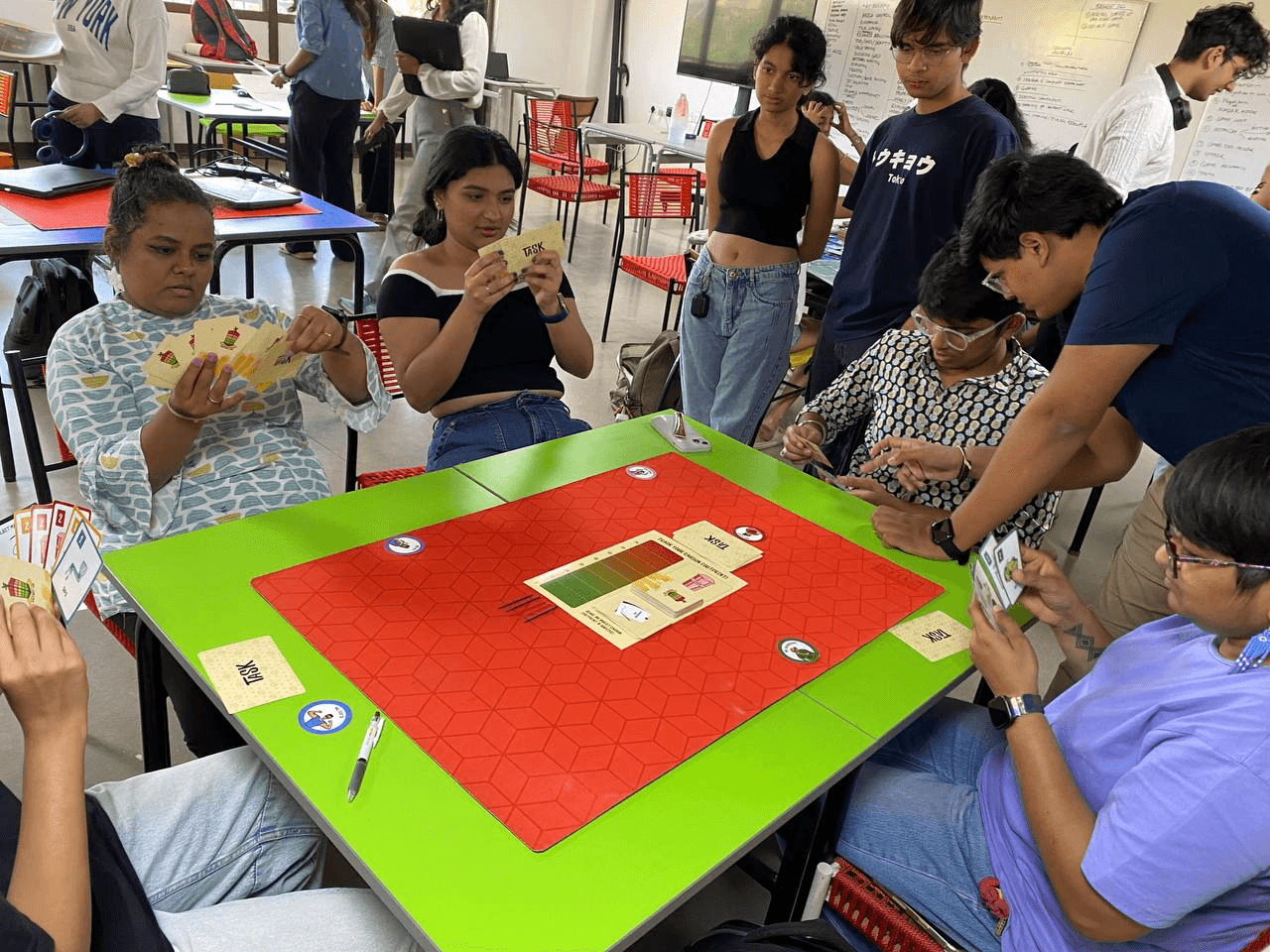
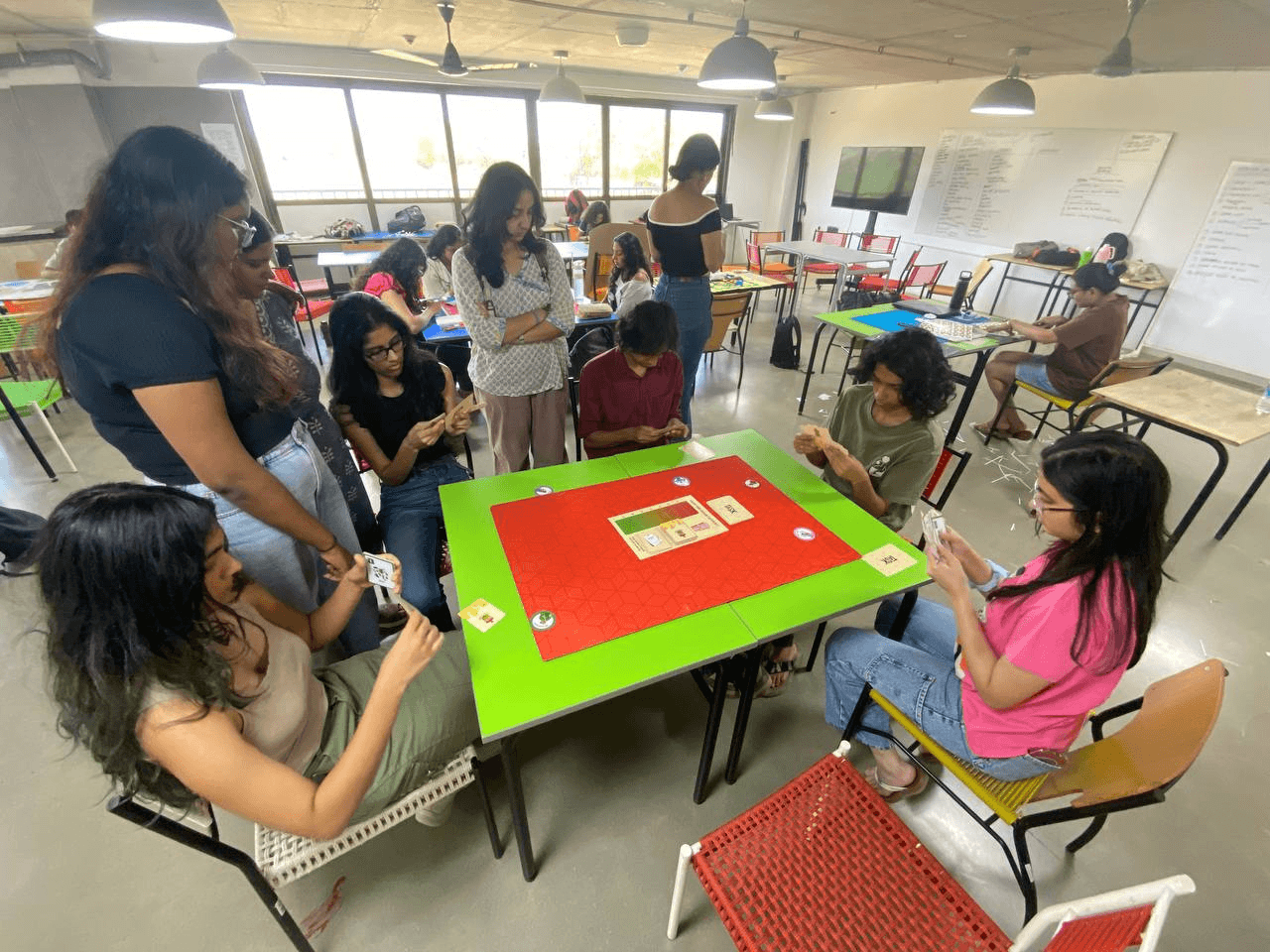
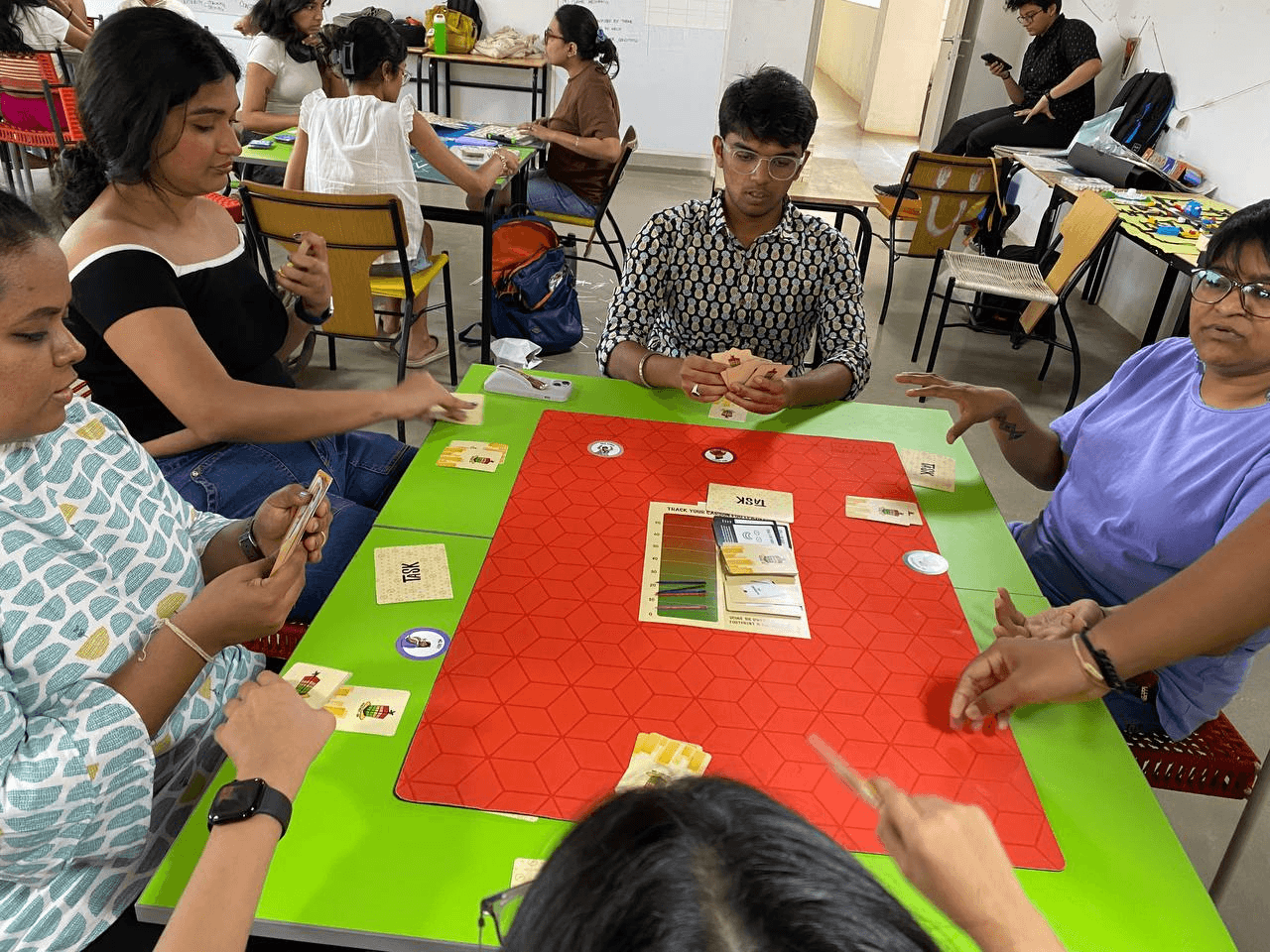

Scoring
During the play testing, a lot of peers/players felt that the scoring system was a bit unfair. They felt that points should be deducted for partial completion of the task card (i.e. if one/two tasks had been completed out of three) and that a bonus deduction should be given to the player who finishes all their tasks. This would motivate them to play the game.
Availability of Resources
There was also debate on the availability of resources for the players. As the main deck didn’t get re-introduced during the game at any point (other than after the Top Card is stolen), players felt that there was no addition of resources during the round, A wild card which would allow them to pick cards from the main deck would make the game more fun to play.
Characters
There was also confusion regarding the characters the players were playing as. Most players assumed that they were playing as individual apartment owners and that they all lived in the same society. This led to confusion regarding why there was no community aspect to the game. It would have been clearer if the cards mentioned the name of the society as well.

