Animals in Entertainment
Is Going To The Zoo Ethical?, Amongst Other Questions…
Group Project | Data Collection | Data Visualisation
The Premise
This survey explores public perceptions of animals used in entertainment. We aim to assess the awareness of animal suffering in the entertainment industry, from films to circuses and zoos. Participants are asked about their views, influences and understanding of the situation presented. The questions also probe their willingness to boycott and to advocate against animal mistreatment. Through the responses we seek to understand the attitudes towards animal suffering and welfare as projected by the public.
Quality of Data
The survey was mostly quantitative. The data we compiled corresponded to:
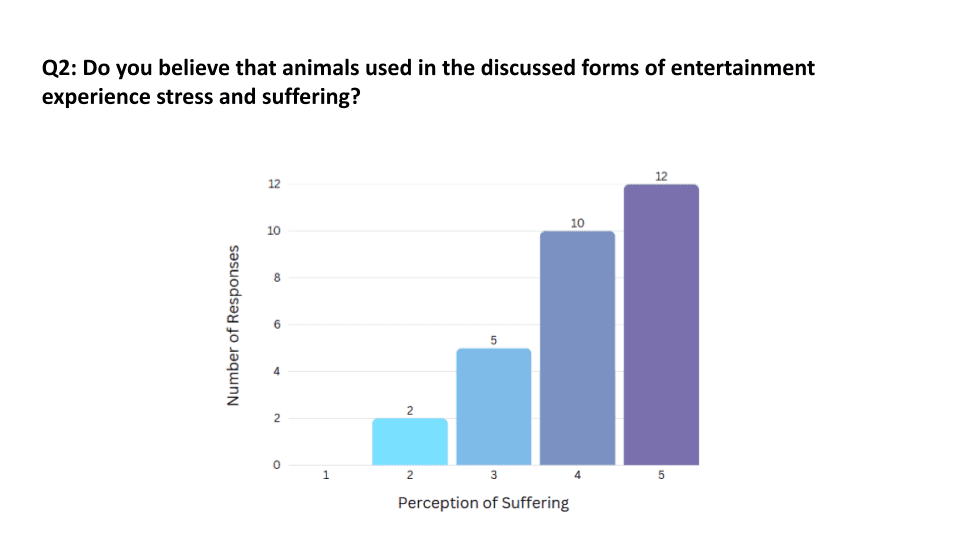
Q2 – Do you believe that animals used in these [discussed in Q1] forms of entertainment experience stress and suffering?
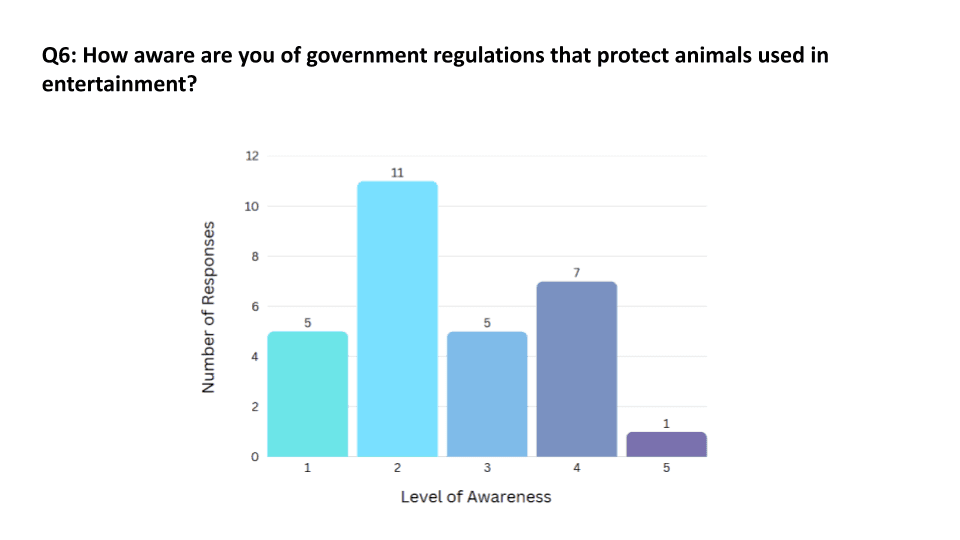
Q6 – How aware are you of government regulations that protect animals used in entertainment?
Q7 – Given your knowledge of current regulations, how sufficiently do you think animals are protected in entertainment industries?
Q8 – Would you be willing to boycott entertainment that uses animals if you believed they were being mistreated?
Q9 – Would you also ask your friends or relatives to boycott entertainment if you believed they were being mistreated?
Two questions asked respondents to give examples of, and rank, forms of entertainment.
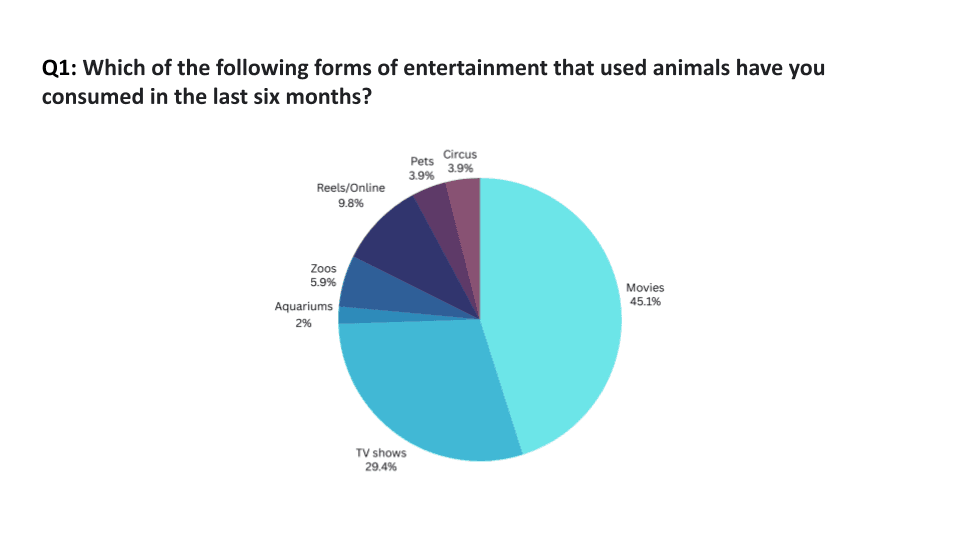
Q1 – Which of the following forms of entertainment that used animals have you consumed in the last six months?
Q3 – Of the forms of entertainment just discussed, which would you guess to be the most unethical or problematic in terms of suffering caused to the animal?
The keywords from responses to the above have been quantified.
The Questions + Responses
Using Excel and Google Forms, the following charts are representations of the responses collected from 29 participants.




Key Insights
These are our observations and insights from the responses to the survey.
Awareness of Animal Suffering and Ethical Concerns
Almost all participants acknowledged the suffering and stress of animals in entertainment industries which points towards a growing awareness ethical concerns, influenced possibly by increased media coverage and documentaries on animal welfare. The perception of suffering however differed significantly both among participants and across forms of entertainment. Circuses/other animal shows received the highest votes as the most cruel form of entertainment, while movies and TV shows were perceived as less harmful, likely due to the assumption that CGI and trained domestic animals are predominantly used.
Willingness to Boycott and Advocate
The participants showed a tough resistance to the consumption any forms of entertainment which they believe causes the suffering of animals, which was visible in the almost uniform 4s and 5s as answers to ‘Question 8: Would you be willing to boycott entertainment that uses animals if you believed they were being mistreated?’ However while trying to enforce boycott, the answers varied as some believed that their words and opinions alone are not enough to have a significant impact, some also mentioning that it is not fair for them to force others to do something, while others were confident in being vocal about their beliefs within their social circles.
Influence of Social and Cultural Factors
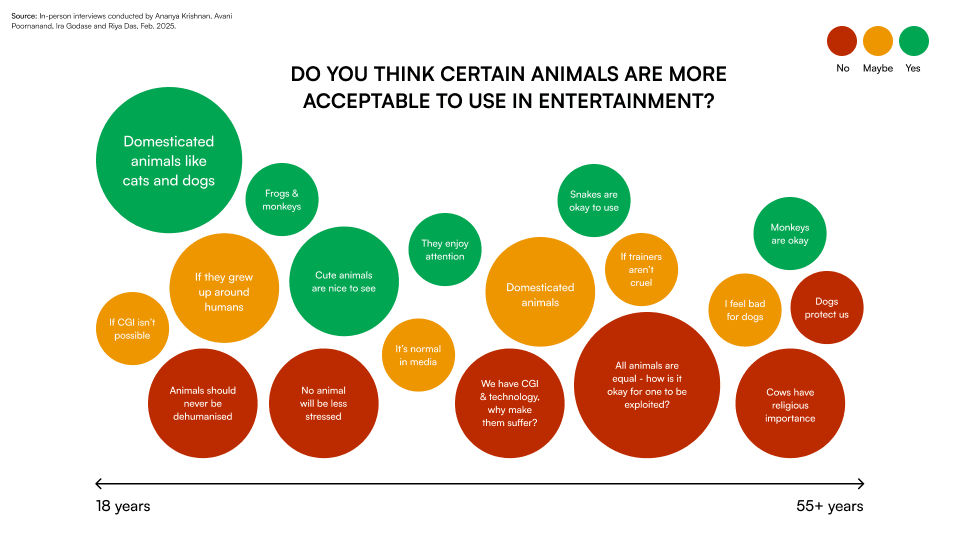
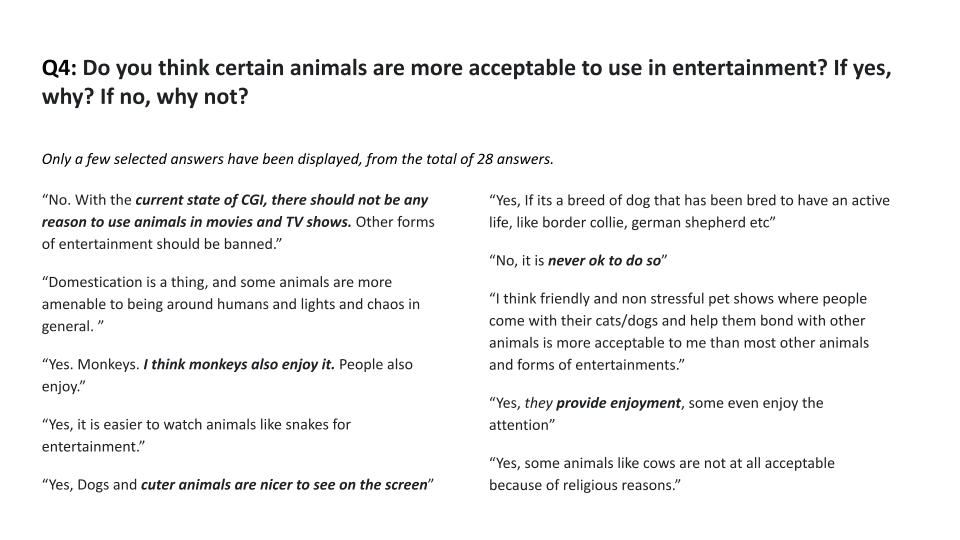
Many of the responses from the participants could be linked to their cultural, religious and societal backgrounds. Their personal beliefs, sentiments, the society they grew up in along with their personal experience, seemed to shape how they view and value animals (e.g., cows being unacceptable due to religious reasons). This reinforces the idea that any major change must come through or take the form of culture for it to be widely acceptable.
Perceptions of Government Regulations
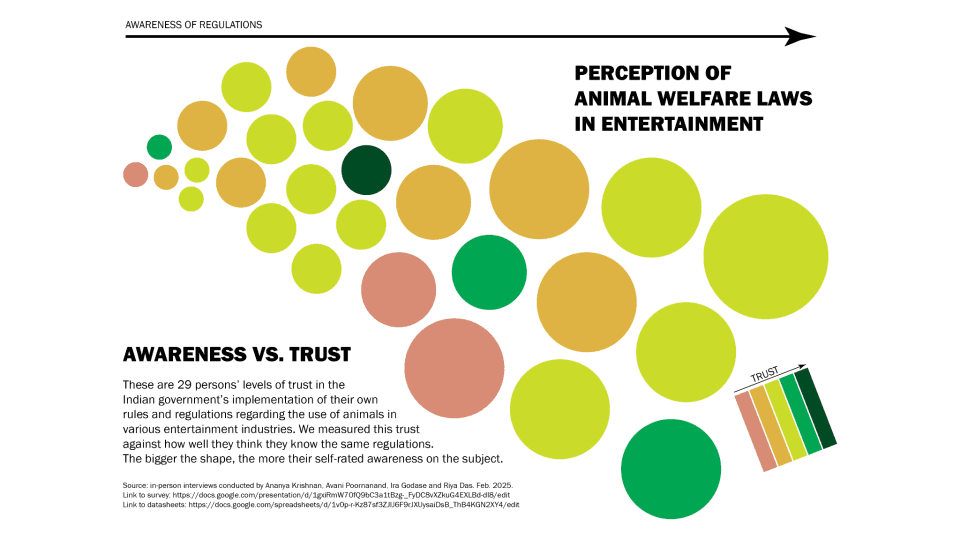
The survey revealed a lack of awareness and confusion among the participants about the government regulations in place to protect animals in entertainment industries, with very few participants answering with a 4 or a 5. Even among those somewhat informed, skepticism prevailed about the sufficiency of these regulations.
Data Visualisations
Based on the raw data collected from the survey, we designed visualisations to highlight key insights.
Softwares used: Power BI, Figma, RawGraphs